

Driving Strategy with Precision: The Importance of Business Intelligence (BI) in Marketing
Beyond Reporting: The Challenge of Fragmented Data
In today's economic environment, executive and marketing boards face a structural paradox: they have never had such comprehensive access to data, yet they increasingly struggle to extract a clear strategic vision from it. Information is systematically scattered across CRMs, advertising platforms, accounting software, and automation tools.
As a result, reporting often devolves into a time-consuming manual consolidation on spreadsheets. This process generates static, fallible analyses that are frequently obsolete by the exact moment they are presented to the boardroom.
Business Intelligence (BI): From Raw Data to Strategic Decision
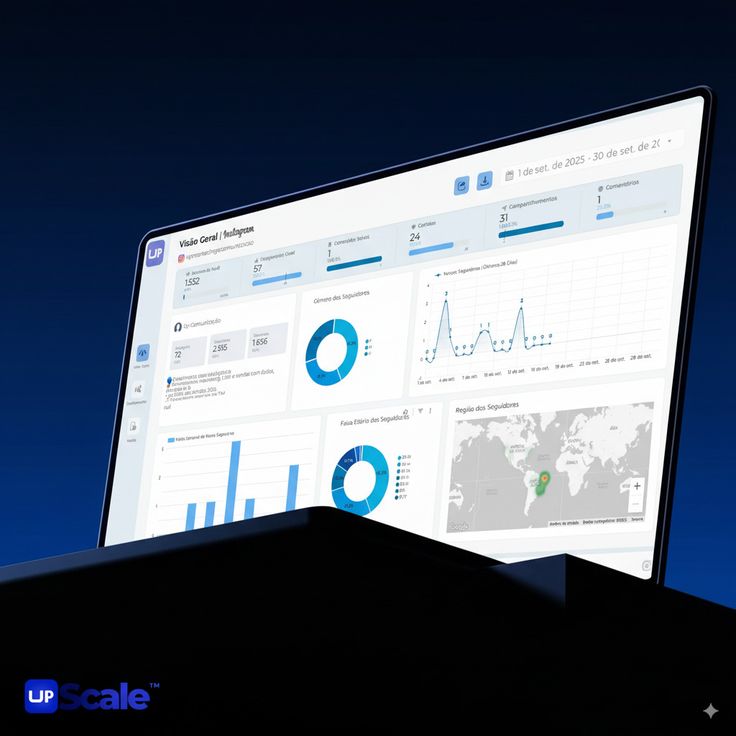
This is precisely where Business Intelligence (BI) comes into play. It is no longer merely decision-support IT reserved strictly for financial departments. BI applied to marketing and sales allows organizations to connect all data sources to engineer real-time Performance Tracking Dashboards.
The objective is perfectly clear: to transform a massive volume of heterogeneous information into visual, interactive, and immediately actionable Key Performance Indicators (KPIs).
Traditional Reporting vs. BI Dashboards
The fundamental difference between a traditional analytical approach and the integration of a Business Intelligence system lies in organizational agility and analytical depth:

- Information Centralization: Instead of consulting five different software tools, BI centralizes all commercial and marketing data onto a single, highly secure management interface.
- Real-Time Updates: Static monthly reports belong in the past. Data is continuously updated, enabling immediate managerial responsiveness to market fluctuations.
- Data Interactivity: Decision-makers can deeply explore the data (drill-down capabilities). With a single click, it is possible to transition from the overall ROI of a campaign to a granular analysis of acquisition costs per channel.
- Elimination of Human Bias: Automating data pipelines removes the risk of errors inherent in manual manipulation, thereby guaranteeing the absolute integrity of corporate information.
Scientific Return on Investment (ROI) Tracking
The primary benefit of a robust BI architecture is the ability to justify every dollar invested. By technically cross-referencing marketing spend data with generated revenue (CRM/ERP data), the executive team secures a transparent and infallible view of the ROI, profitability per customer segment, and the true cost of acquisition.
Regain Complete Control Over Your Investments
If consolidating your performance reports costs your teams days of labor instead of seconds, your company is sacrificing competitiveness and agility. Discover how our expertise in engineering Business Intelligence (BI) Dashboards can structure your strategic management. Make your data speak, and base your corporate decisions on mathematical certainty.




0 Comment
Be the first to leave a comment!
Leave a Reply